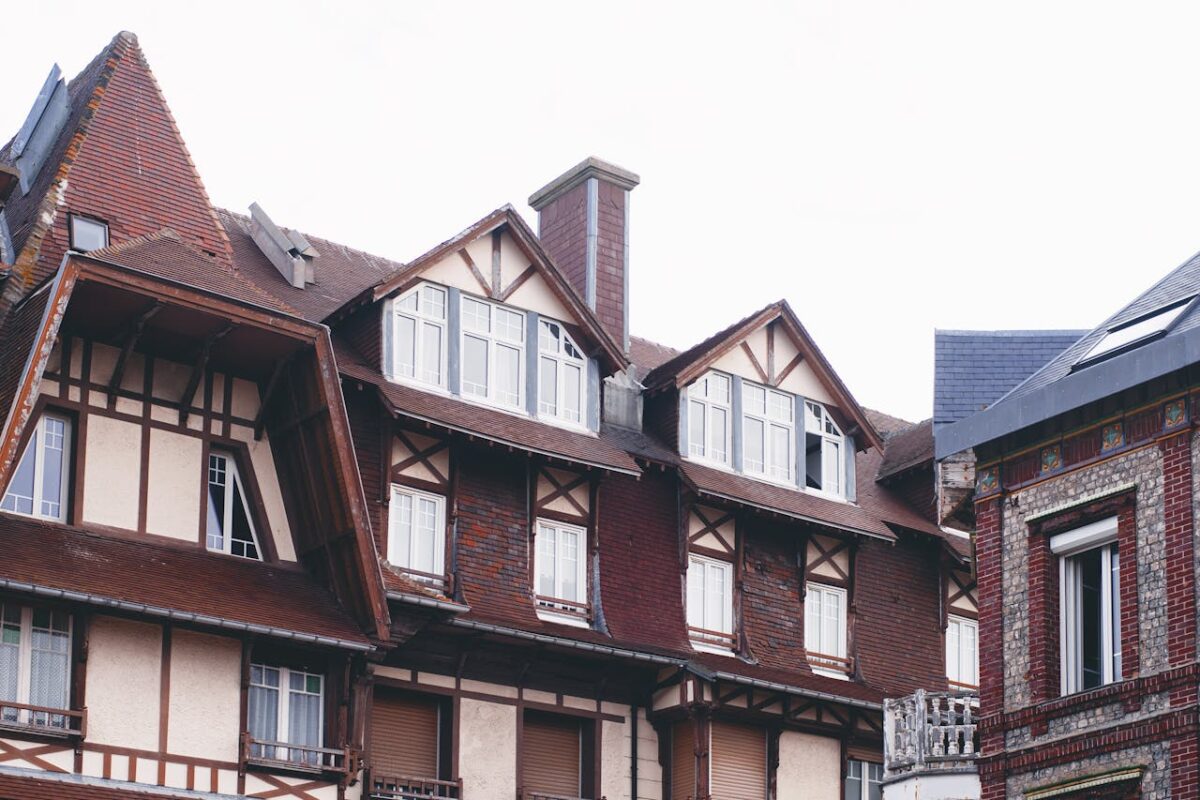
Once upon a time, in a world not so different from our own, roofs were as simple as a hat on your head—a basic necessity to keep the rain off and the warmth in. Fast forward through centuries of architectural fashion shows, and we find that roof construction has morphed from the equivalent of a straw hat into something more akin to a high-tech helmet, equipped with solar panels and green gardens.
From Straw To Sophistication
In the beginning, our ancestors looked up (probably to avoid a raindrop to the eye) and thought, “We need a better hat for our homes.” Thus began an era of thatch and mud, elegantly draped over frameworks of wood. These early roofing techniques were the fedoras of their time – stylish, given the era, but not particularly waterproof or long-lasting. Materials ranged from locally sourced straw to stone slabs, depending on one’s zip code in ancient civilization and the weight their home could shoulder.
The Rise Of The Roofing Renaissance
As time marched on, so did the evolution of roofing. Like turning a page from the dark ages into the renaissance, roofing materials and techniques began to reflect the leaps in technology and understanding of the world. Enter stage left: clay tiles, slate roofs, and even early forms of metal roofing. These were the tailored suits of roofing – sleek, more durable, and with a hint of “I’ve arrived.”
But with sophistication came complexity. The materials might have been ready to fend off Mother Nature’s mood swings, but the knowledge and skill to install and maintain these roofs were like learning a new dance without stepping on your partner’s toes. It was a period of growth, learning, and occasional leaks.
The Modern Roof: A High-Tech Hat for Your Home
Today, we benefit from the legacy of pioneering architects, residing under roofs that are smarter, more sustainable, and more durable than ever before. Contemporary advancements in materials and construction methods have evolved roofs from basic protective coverings to multifunctional crowns that enhance our homes.
Materials now range from traditional asphalt shingles to innovative solar tiles that convert sunlight into electricity. Green roofs, adorned with foliage, not only enhance aesthetic appeal but also contribute to temperature regulation, support local ecosystems, and promote environmental sustainability. It’s as if our homes are equipped to tackle climate change and reduce energy costs effectively. We can also contact experts for roof maintenance in Ormond Beach, Western Kentucky, and beyond to prolong their lives.
Key Learnings For The Stylish Homeowner
What can we, as industry professionals, take away from this evolution of roofs? First, that the “hat” of a home or business deserves as much attention as its foundations. Regular maintenance and upgrades can transform a roof from a basic necessity into a distinct statement piece that reflects both style and energy efficiency.
Secondly, it is advisable to consider investing in the latest roofing technology. While the initial investment may be substantial, the advantages—including energy savings, enhanced property value, or even the distinction of having a cutting-edge building in the neighborhood—justify the expenditure.
In conclusion, it is essential to recognize that your building’s roof serves a critical role beyond aesthetics—it acts as its protector, insulator, and, increasingly, its source of power generation. Make informed choices, adhere to regular maintenance, and your roof will serve you well for many years ahead.
